

Collection Export
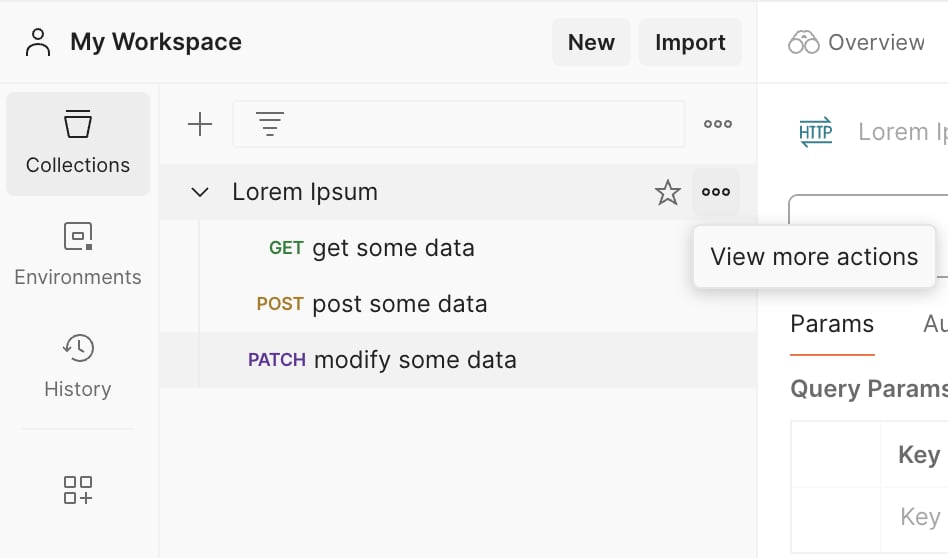
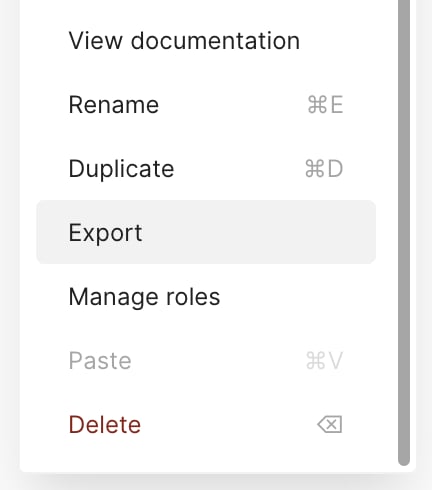
Open Postman and select the collection you want to migrate. Click on the··· followed by View more actions to open the dropdown menu and scroll down until you find Export, then click on it.
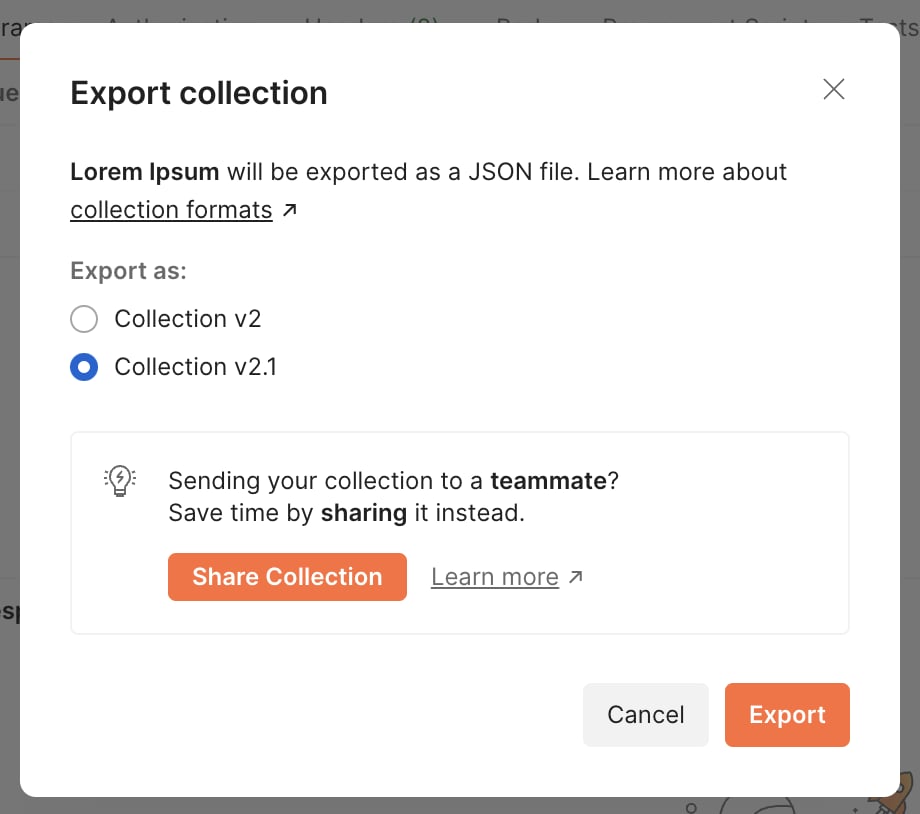
Collection v2 or Collection v2.1 format and click on the Export button.
Export Data Dump
Bulk Import from Postman is included in Bruno Ultimate Edition
-
Select the settings icon in the header, then select
Settings. -
Select the Data tab, then select
Request Data Export. -
Select
Export Data, then select the data types you want to export. You can export collections, environments, or both. -
Select
Request Data Export.
-
Open the import menu and select
Import Collections - Select the zip file where the export was saved
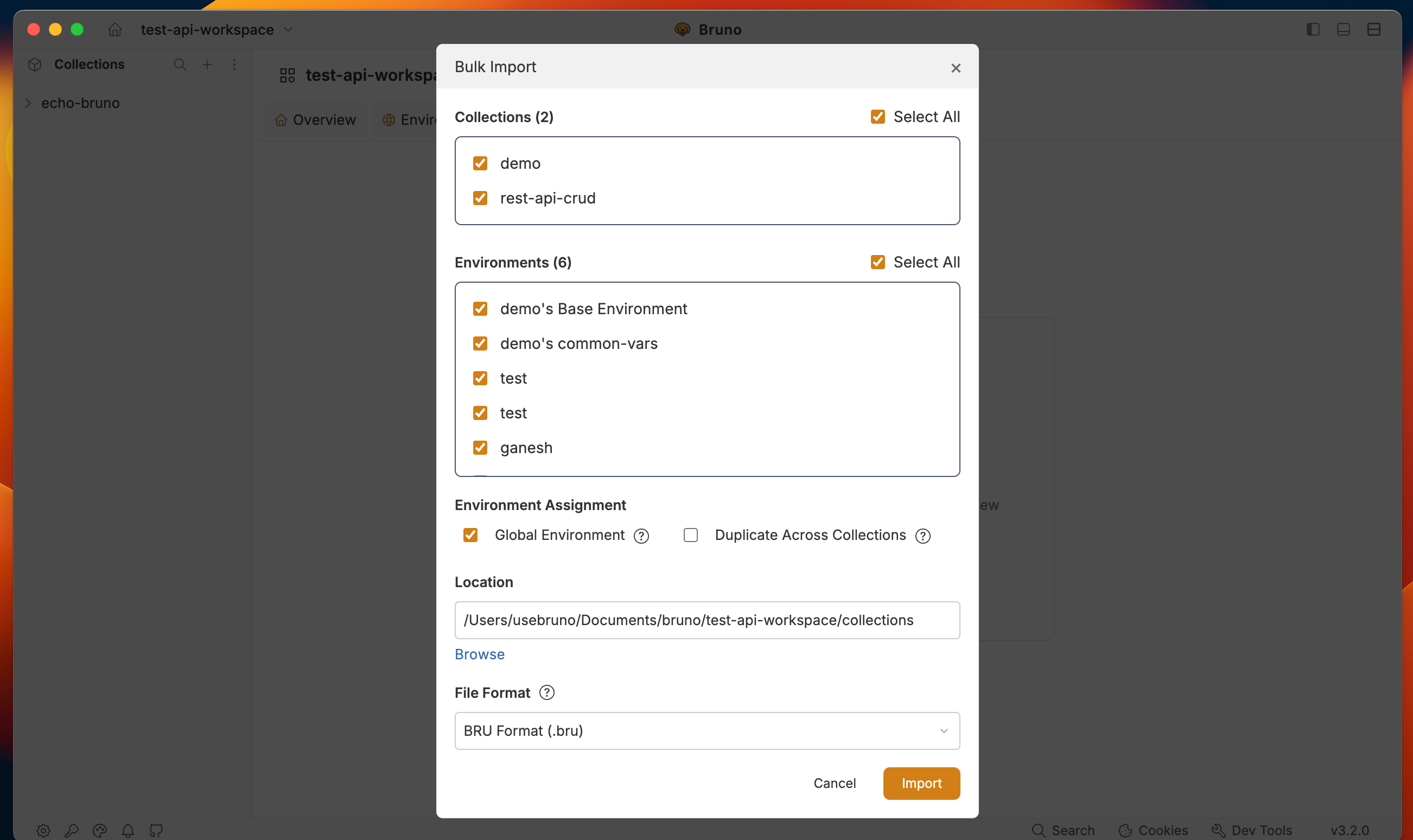
- You will now see a list of all collections available for import. By default, all collections will be selected. You can chose to omit any from the import that you’d like.
-
Designate a location for the collections and press
import
Bruno automatically translates common Postman script APIs (such as
pm.test, pm.environment, pm.globals, pm.collectionVariables, and pm.response) to their Bruno equivalents during import.See the Scripts Translator page for the full list of supported translations.npm packages used by Postman scripts
When you import a Postman collection, Bruno scans the scripts forpm.require() and require() calls and groups any external packages it finds into a Install packages prompt. You’ll see this dialog after the import completes whenever the collection references packages that need attention.
The prompt can show up to three sections:
- Packages used in scripts — npm packages referenced by the imported scripts that aren’t yet installed in the collection’s folder. Bruno can install them for you with a single click, or you can copy the suggested
npm install --save <packages>command and run it yourself in a terminal. - Libraries that need Developer Mode — bundled libraries and Node.js built-ins (such as
lodash,moment,crypto, orfs) that are only available when the collection runs in Developer Mode. Bruno offers a Switch to Developer Mode action when these are detected. - Not supported in Bruno — Postman-specific packages without a Bruno equivalent (for example,
postman-collection,postman-runtime,newman, or@postman/*packages). Scripts that call these will fail at runtime and need to be rewritten.
require() at runtime.
If npm isn’t on your PATH, the install step fails with a clear error. Install Node.js/npm, then either retry from the prompt or run the suggested command manually.
Bulk imports queue one prompt per imported collection so you can review each one in turn.
Environment Import and Export
Environments in API clients are sets of variables that allow you to run requests against different server configurations (development, staging, production) without changing your request URLs.Exporting Environment from Postman
- Open Postman and locate the Environments section in the sidebar
- Find the environment you want to export
- Click on the three dots (…) next to the environment name
- Select Export from the dropdown menu
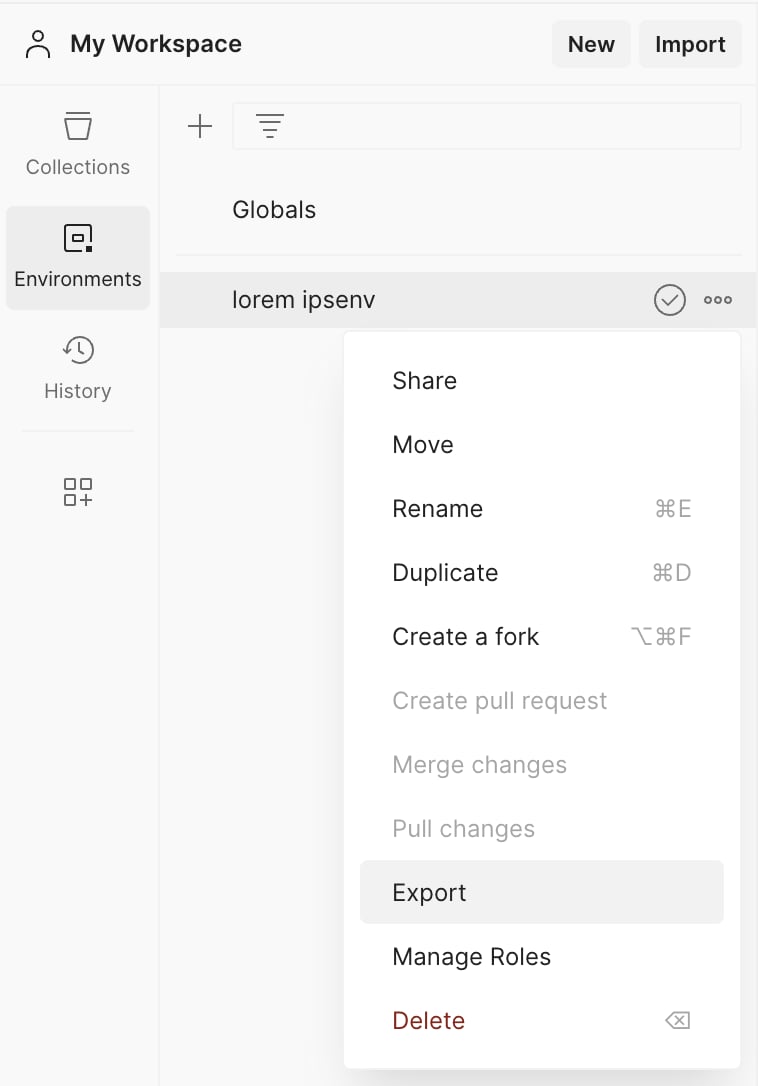
- Choose a location to save the JSON file and click Save
Importing Environment into Bruno
Importing Your First Environment
- Open Bruno
- Click on the Environments icon in the top-right corner
- Click on Configure environments
- You’ll see options to Create environment and Import environment
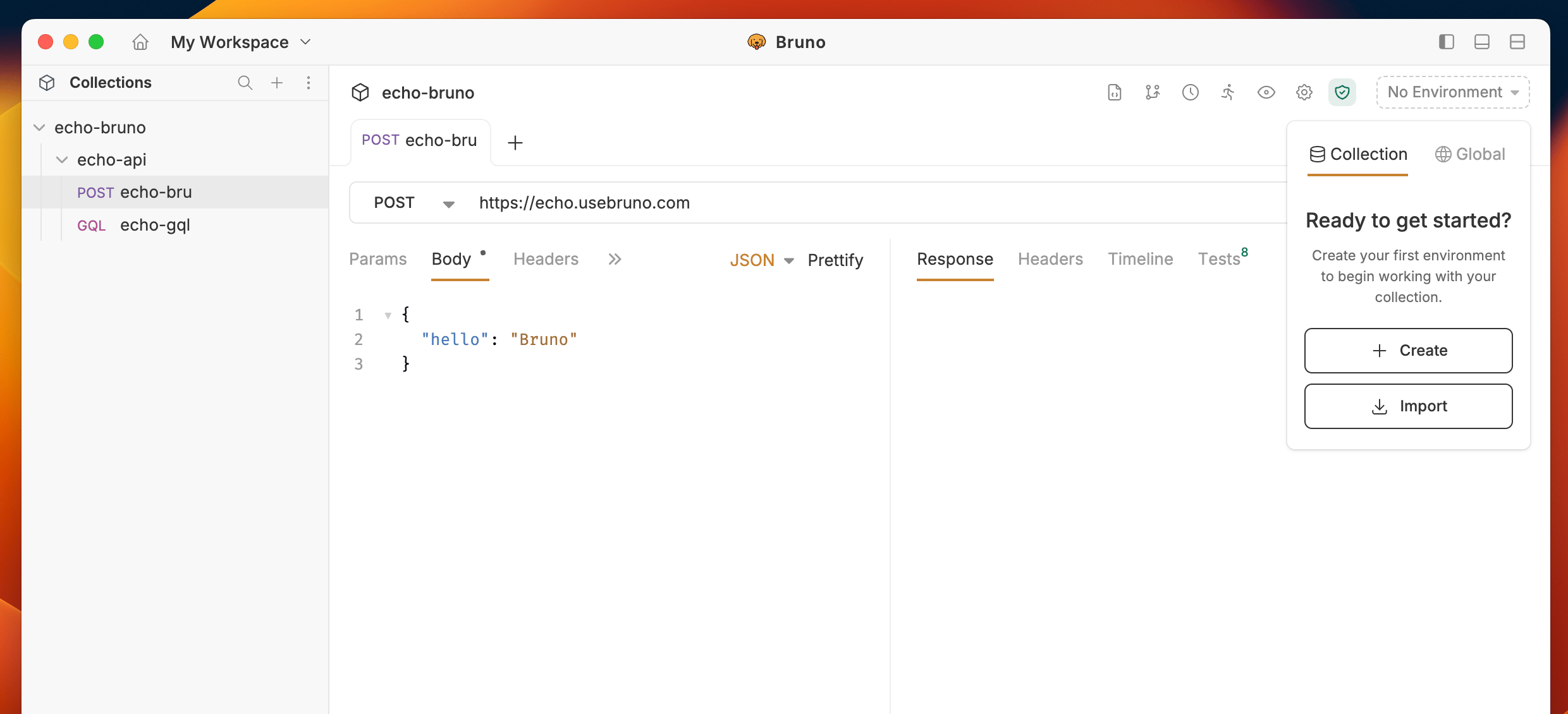
- Click on Import environment
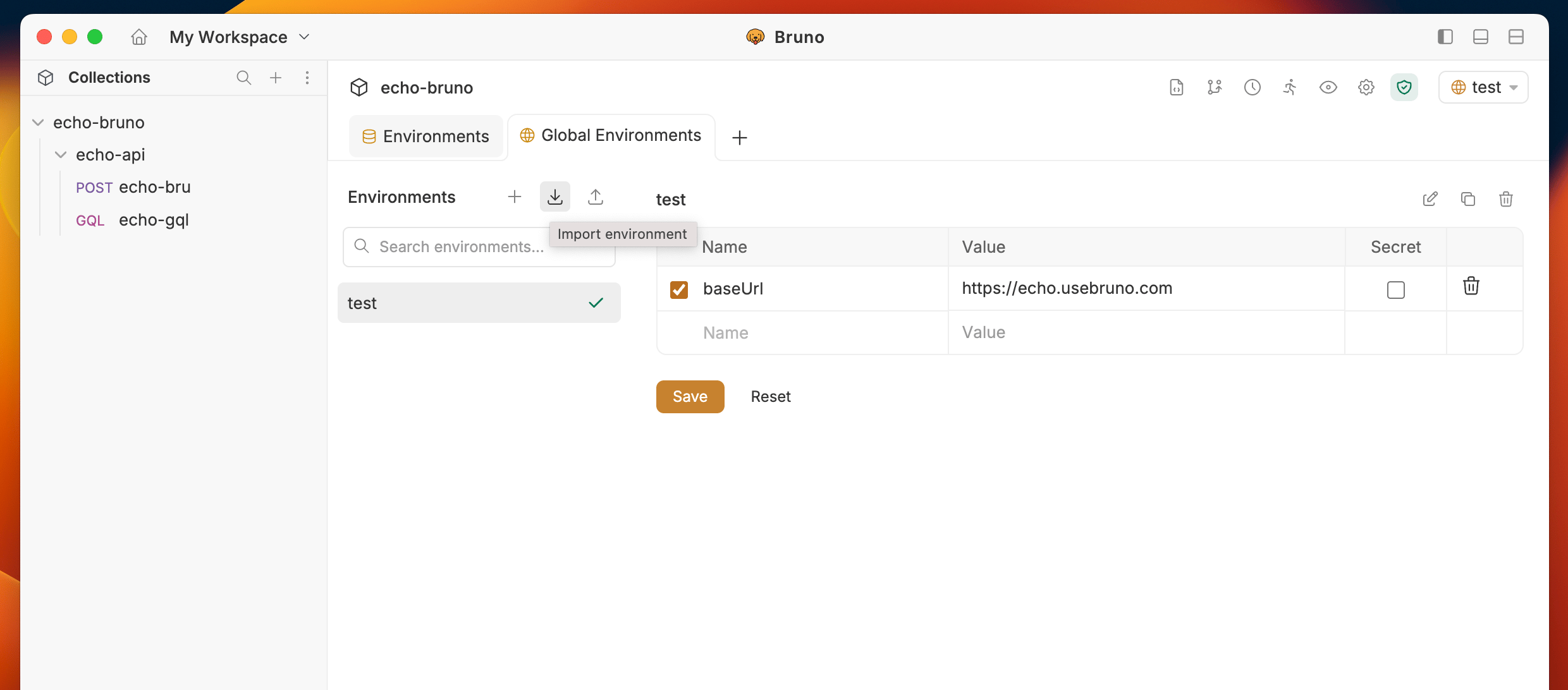
- Select the Postman environment JSON file you exported
- The environment will be imported with all its variables
Adding to Existing Environments
- Open Bruno
- Click on the Environments icon in the top-right corner
- Click on Configure environments
- Look for the Import button at the left sidebar
- Click on Import environment
- Select the Postman environment JSON file you exported
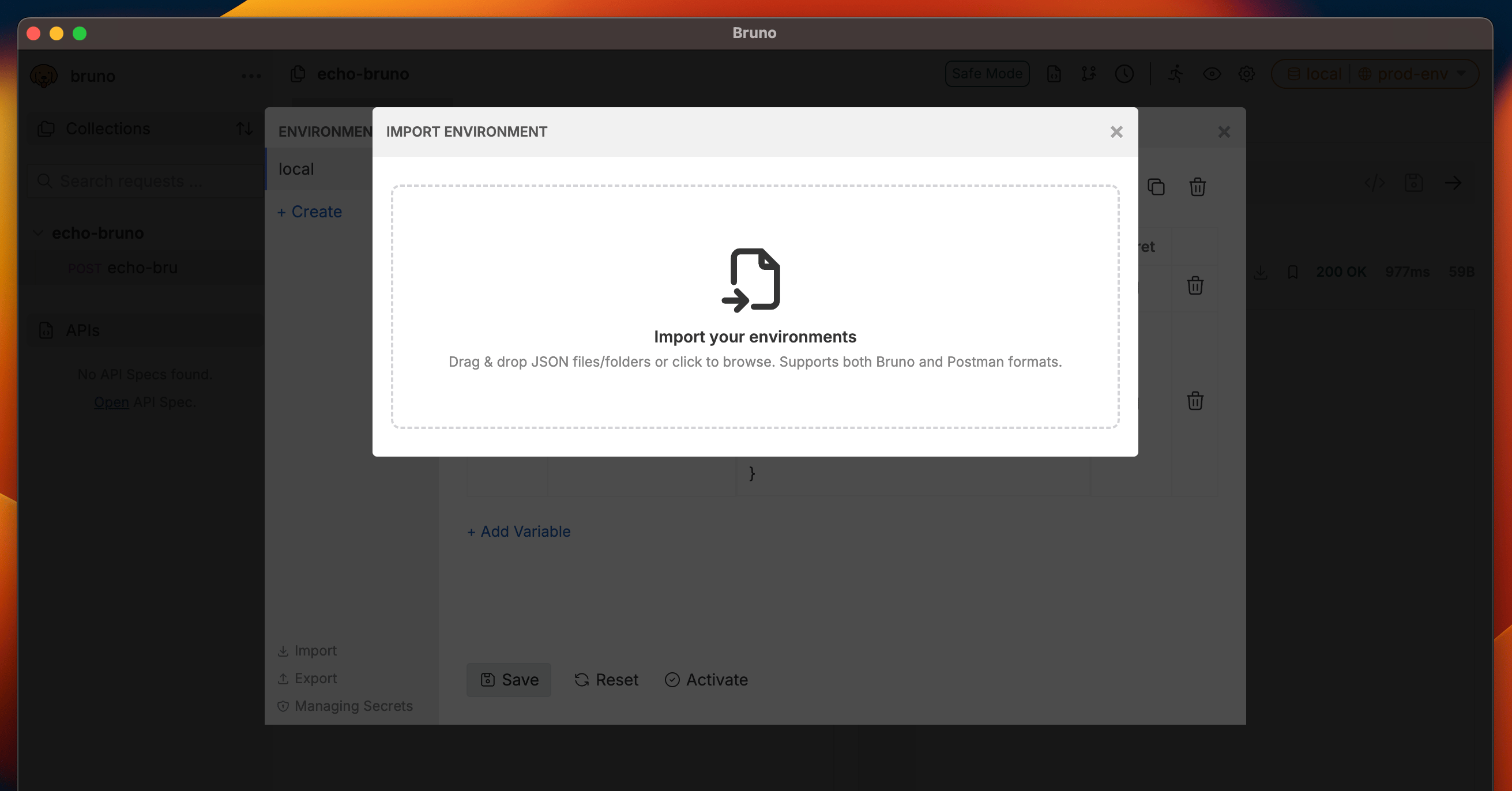
- The environment will be added to your existing environments
Note - Bruno environment names and variables must only contain alphanumeric characters, ”-”, ”_”, ”.” and cannot start with a digit. Non-conforming characters (such as ”/”) will be converted to ”-”.
Postman allows variable values to be numbers, booleans, or objects, but Bruno stores all variable values as strings. During import, non-string values are automatically converted — for example,
5000 becomes "5000", true becomes "true", and objects are serialized as JSON strings.